Our plutonomy prediction: 20 years on
First published in the 2007 launch edition, we’re revisiting our Wealth Report predictions 20 years on.

First published in the 2007 launch edition, we’re revisiting our Wealth Report predictions 20 years on.

Two decades on, we ask those who were there at the start: does this argument still stand?
In 2007, Knight Frank researchers met with Citi Private Bank to discuss the idea of plutonomy – the economic model where the wealthy command a disproportionate share of global wealth. The term was coined by Ajay Kapur, then Citi’s Global Equity Strategist who, by naming it, turned a cluster of economic forces into a recognisable phenomenon to be studied and acted on.
We left that meeting with a plan to produce a report exploring the implications of plutonomy for global real estate markets. The result was the first edition of The Wealth Report, and its conclusion was clear: these forces would shape the trajectory of prime real estate and luxury markets worldwide for decades.
20 years on, we caught up with three key individuals who were in the market when the call was made to examine how it has played out.

Former Head of Citi Private Bank, UK & Ireland, David is now Senior Adviser at Smith Square Partners and New Quadrant Partners, and to significant global families.
David Poole was among the group of Citi executives at that first meeting. For him, the deepening of economic influence of the ultra-wealthy has validated the thesis. “The world has and does favour wealthier people,” he says. Over the past two decades, “incremental wealth creation increases the higher up the pyramid you go”.
David suggests that, while the wealthy may have dominated recent decades, retaining economic influence over the next 20 years will depend on their ability to navigate a fractured world. He predicts preserving wealth will require a return to “middle-ground politics and economics” to restore stability and curb wealth-destroying political acrimony.
Interested in David’s view? Read more in the full report.
Former Global Head of Residential at Knight Frank, Andrew is now a strategic adviser to global private families and businesses.
Andrew reflects that the traditional model of owning a single primary residence has given way to cross-border footprints for the wealthy, creating high demand for super-prime homes globally. At the same time, communication advances have untethered the elite from physical boardrooms. Today, “wealth is truly, truly mobile,” Hay observes.
Yet over the past decade, Hay has also seen the global map shrink for the ultra-wealthy. While capital allocators once considered up to 15 different destination markets, “volatility has reduced the number of places where people are comfortable investing”.
Looking ahead, Hay anticipates the global elite will likely continue their defensive diversification, anchoring their fortunes where dynamic growth is matched by legal security.
Interested in Andrew’s view? Read more in the full report.
Jonathan is co‑founder and CEO of Cain, a multinational real estate-focused investment firm.
Jonathan remains committed to the thesis that the global economy can outperform for investors focused on what the wealthy want. “We came out of the pandemic and consumers suddenly wanted to spend their money on experiences,” he observes.
Goldstein leans into this idea by deploying sovereign and family office funds into ultra-luxury real estate and hospitality, particularly branded residences, elite hotels, and private clubs. “People are prepared to pay a premium for truly exclusive access to truly luxury experiences,” he explains.
Looking ahead, Jonathan’s conviction in the enduring spending power of the global elite remains unshaken. For him, the strategy of servicing the ultra-wealthy is clear: “It’s a growing asset class and it’s only going one way.”
Interested in Jonathan’s view? Read more in the full report.
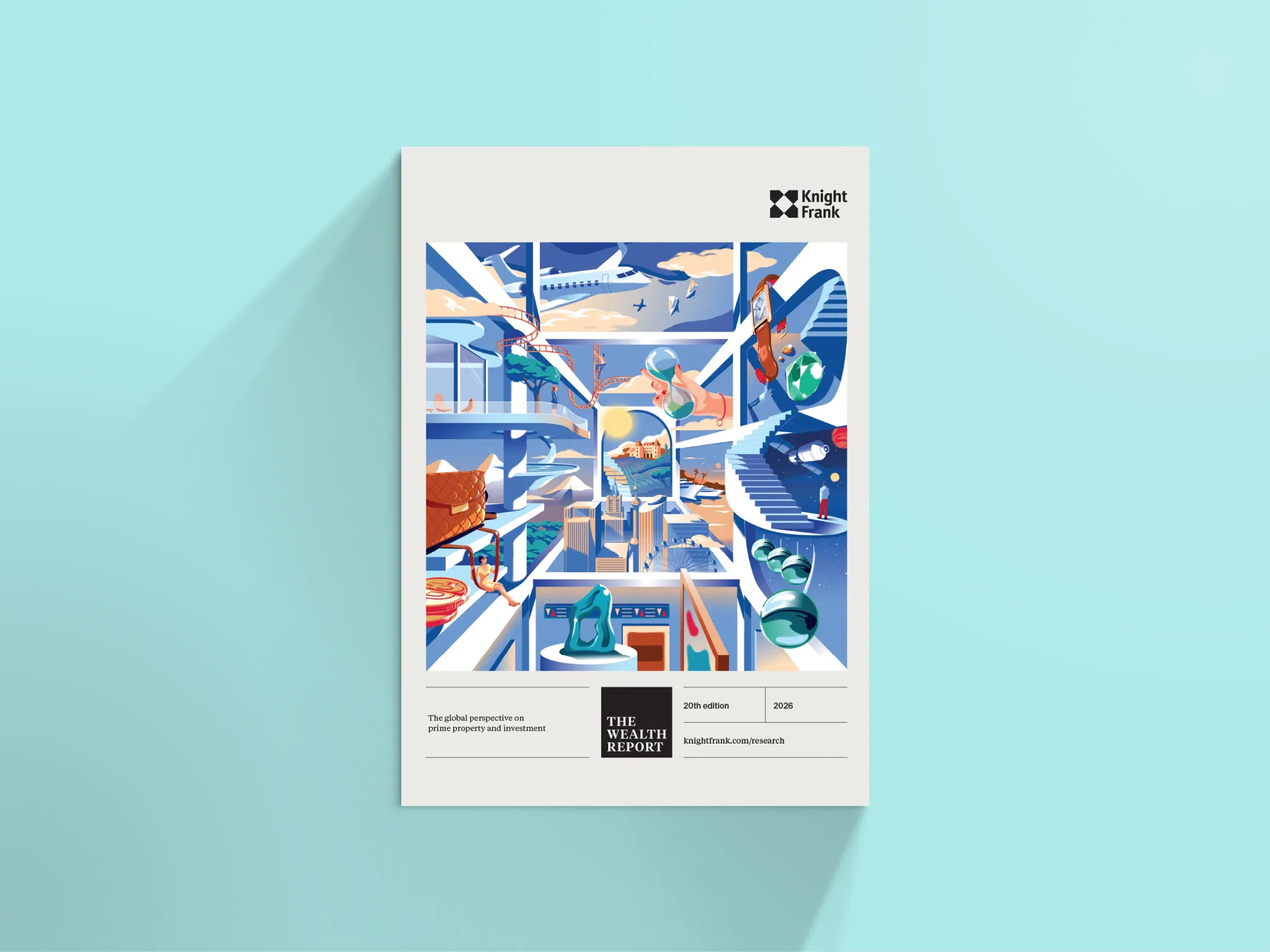
Delve deeper into the insights, access our comprehensive databank, and explore future predictions from our team of experts.

The Wealth Report
Tax has long been a factor driving the mobility of the rich. But havens are still facing stiff competition from traditional wealth hubs.
23 April 2026

The Wealth Report
London wrote the script for an era of global plutonomy. Now it’s having to learn to share the spotlight.
23 April 2026

The Wealth Report
Our latest Family Office Survey reveals shifting strategies, rising ambitions, and the forces reshaping this dynamic financial sector.
23 April 2026

The Wealth Report
Two decades on from the first edition of The Wealth Report, we revisit our prediction that plutonomy would reshape global markets.
23 April 2026

The Wealth Report
Explore the headline figures from our extended Wealth Sizing Model, providing a comprehensive view of fast-changing global wealth dynamics.
23 April 2026
Sorry!
An unexpected error has occurred.
Please try again later.