Into new territories: Asia-Pacific’s luxury property markets evolve
Rising wealth, shifting buyer preferences and the spread of global brands are reshaping Asia-Pacific’s luxury residential markets, creating new hotspots and pushing established hubs in new directions.
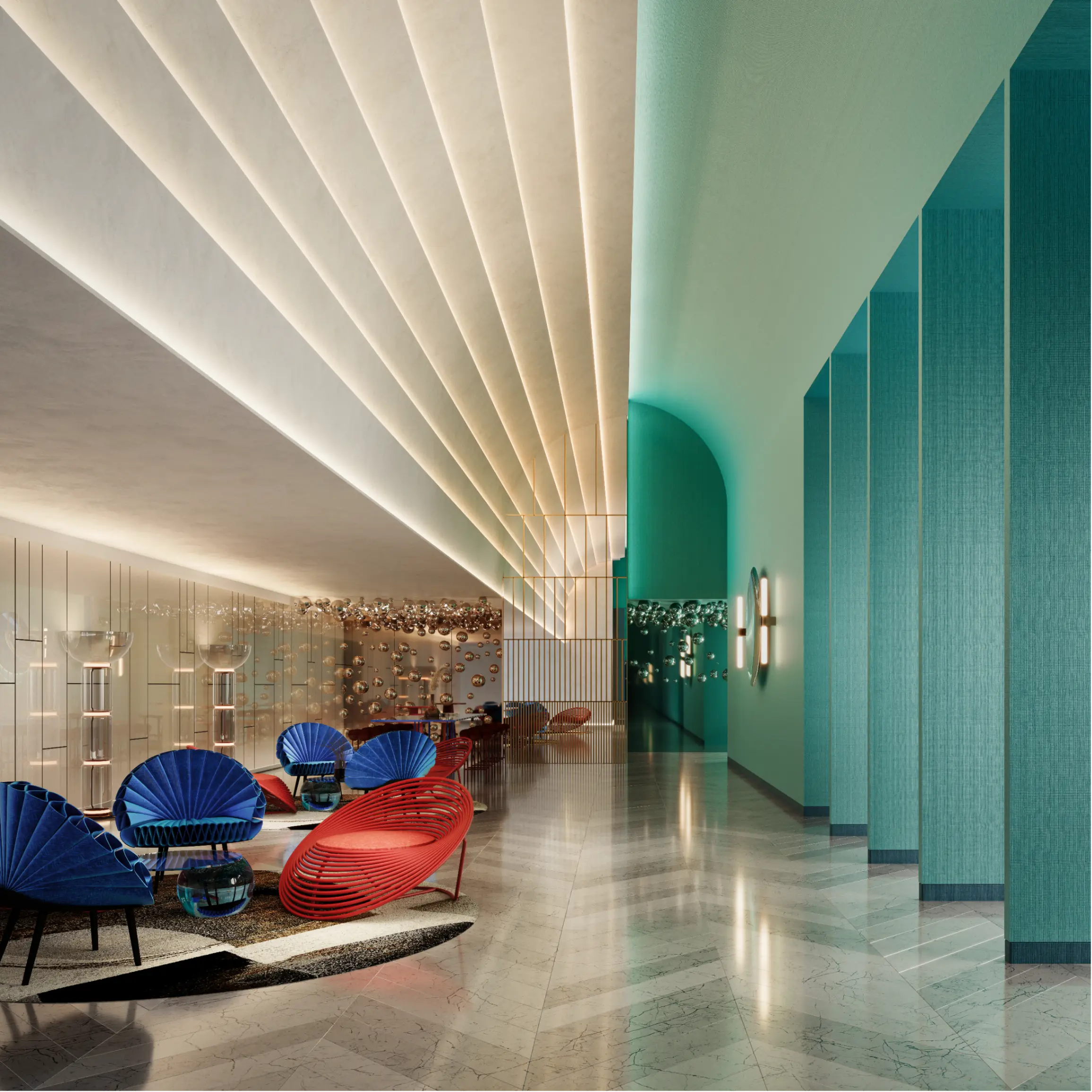
Aman’s Singapore debut tests the power of global luxury brands
Branded residences remain rare in Singapore, where high taxes on international buyers and the strength of domestic developers create a selective market.
On the face of it, few cities seem better suited to Aman branded residences than Singapore. The group announced its debut at The Skywaters in October 2025 and quickly secured a new pricing record.
Its early success makes Singapore’s limited history of branded residences all the more striking. The reason is partly tax: overseas buyers pay a 60% Additional Buyer’s Stamp Duty on top of existing levies.
Brands must also strive to deliver meaningful differentiation in markets such as Singapore and Hong Kong, where prestigious addresses and established developers already carry significant weight, according to Christine Li, Knight Frank’s Head of Research Asia-Pacific.
Against this backdrop, the strongest branded projects can distinguish themselves through design, service and lifestyle experiences, Li adds.
“Singapore remains a relatively selective market for branded residences,” says Li. “We expect demand to be concentrated among UHNWIs, particularly those with residency status. At the same time, the limited number of branded schemes gives distinctive, well-executed projects an opportunity to stand out within the wider luxury residential market.”
The limited number of branded schemes gives distinctive, well-executed projects an opportunity to stand out.
18%
of global branded residence projects, live and pipeline, are in Asia-Pacific
Hong Kong’s prime market is becoming more polarised
Exceptional homes continue to set records, while stronger sales volumes are more often concentrated at accessible entry points within the prime market.
In Hong Kong, where the market is dominated by domestic developers that are considered attractive brands in their own right, trophy developments are also setting new benchmarks.
The Legacy launched its first phase at a new level for the market, and a duplex set a record for Hong Kong’s most expensive single residential transaction. Other projects have demonstrated greater depth of demand, with strong sales volumes achieved in a single day or within months of launch.
Ultra-wealthy buyers are still willing to pay record prices for exceptional homes, but momentum is more often concentrated at accessible entry points.
The contrast points to an increasingly polarised prime market: ultra-wealthy buyers are still willing to pay record prices for exceptional homes, but momentum is more often concentrated among homes offered at more accessible entry points.
Vietnam is emerging as a leading branded residence growth market
Rising wealth, record tourism and international brands are reshaping Vietnam’s luxury residential market.
Rapid increases in domestic wealth, combined with surging demand for Vietnam’s resort destinations, have turned the country into one of the world’s leading branded residence growth markets. It has the fifth-largest development pipeline globally and accounts for 5% of projects worldwide.
The market’s growth is best understood through a series of inflection points rather than a single take-off year, says Tuyen Huynh, Head of Valuation and Research at Knight Frank Vietnam. She cites the easing of restrictions on foreign property ownership in 2015 and the arrival of branded residences in 2021 as important milestones.
Luxury supply has expanded rapidly, while branded and trophy developments have established an ultra-luxury tier. Growing private wealth, rising international arrivals, liberal visa policies and infrastructure investment are supporting that expansion.
“The market is best understood through a series of inflection points rather than a single take-off year,” says Huynh.
India’s market is expanding beyond traditional hotel brands
A growing wealthy population and changing ideas of luxury are attracting fashion and lifestyle names alongside hospitality operators.
India is now the world’s sixth-largest hub for UHNWIs and has the third-largest billionaire population. Before the pandemic, it had fewer than seven branded residence schemes; there are now around 34, with more in the pipeline across hotel and non-hotel formats.
The pandemic marked an inflection point, coinciding with a sharp rise in luxury spending, says Ankita Sood, National Director of Research at Knight Frank India.
Luxury is no longer defined solely by scale.
While branded residences globally are predominantly associated with hotel operators, India is attracting names from fashion and luxury lifestyle. A prestigious address and distinctive interior design take precedence, while buyers favour larger apartments where possible.
“Luxury is no longer defined solely by scale; buyers are seeking curated experiences, distinctive design, personalised services and exclusivity,” Sood says.
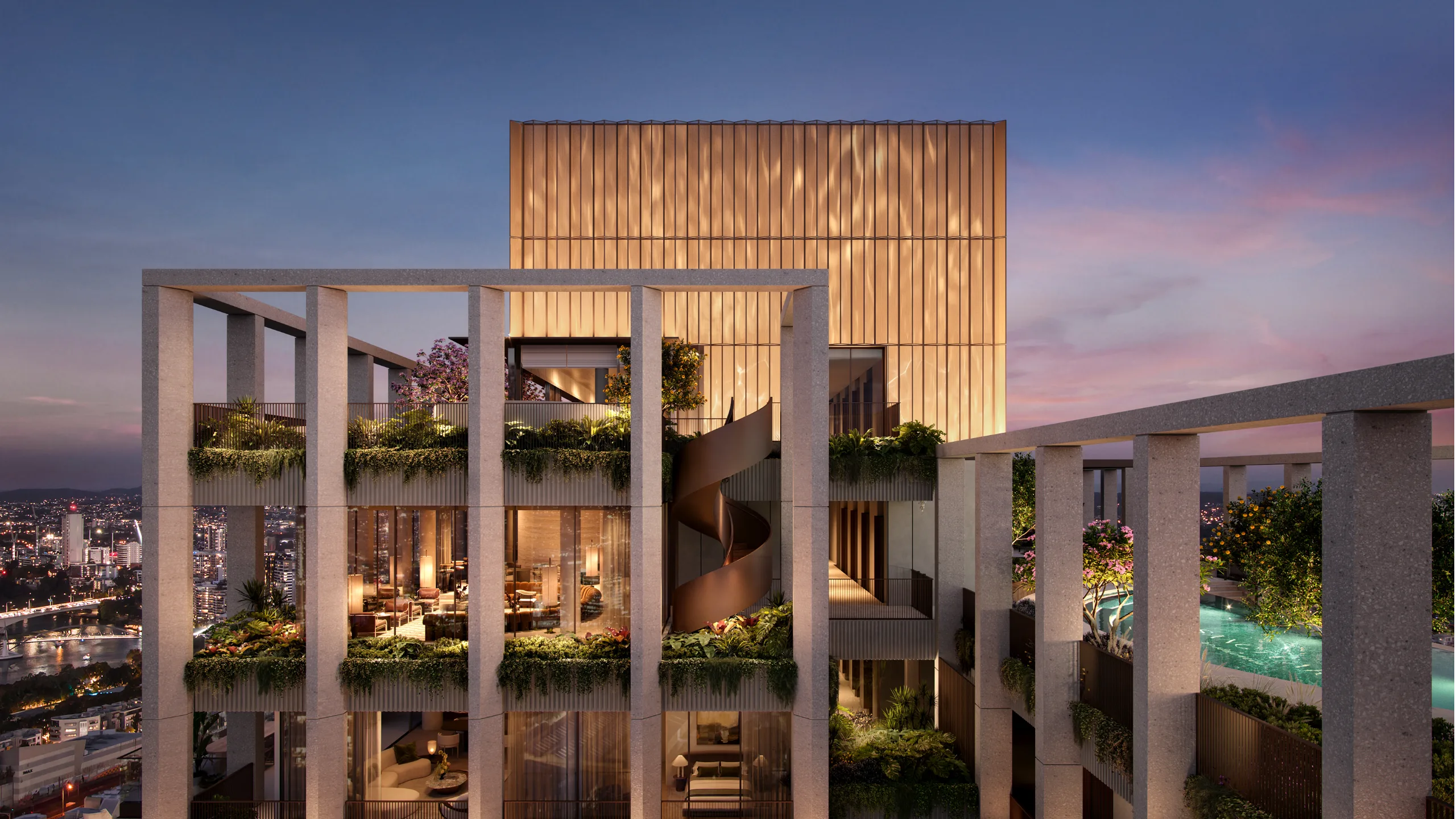
Brisbane’s big leap
Long overshadowed by Sydney and Melbourne, Brisbane is emerging as one of Asia-Pacific’s fastest-growing luxury residential markets.
The 2032 Olympics are accelerating investment, but the city’s appeal extends beyond the Games. Queensland is Australia’s fastest-growing state for interstate migration, while Brisbane’s more permissive planning system is helping investment flow into hospitality, retail and residential property.
“People used to go to Sydney or Melbourne. Now they’re going to Sydney, Melbourne or Brisbane, and increasingly Brisbane is first choice,” says Tim Forrester, founder and Managing Director at Aria Property Group.
Sanctuary by Aria, Brisbane
Brisbane’s luxury residential market is becoming more sophisticated, and branded residences are beginning to gain traction, says Adam Ross, Associate Director, Prestige & International Sales at McGrath Estate Agents.
Amenity-rich buildings are now expected at the top end of the market. Residents are increasingly looking for an ecosystem of concierge, wellness and club spaces, with the apartment itself accounting for “only 30-40%” of what they feel they are buying, Forrester adds.
Increasingly Brisbane is first choice.
Brisbane’s prime market is also outpacing its larger rivals, although Sydney and Melbourne retain the international recognition and deep pools of global buyers that Brisbane is still building.
Liam Bailey is Global Head of Knight Frank’s Research Department, leading the firm’s global research strategy and overseeing projects across the UK and international markets.
Talk to our luxury development experts.
Our global Branded Residential Developments team offers seamless sales, marketing, distribution, and consultancy solutions. Fill in your details and we'll be in touch to discuss your needs.