All the bells and whistles: America’s luxury property boom
A surge in wealth creation is driving demand at the top of America’s residential markets, as developers compete through distinctive design, branded living and ever more elaborate amenities.


A surge in wealth creation is driving demand at the top of America’s residential markets, as developers compete through distinctive design, branded living and ever more elaborate amenities.

No country creates UHNWIs at the pace or scale of the US – underpinning growth in its super-prime residential markets.
During the five years to 2026, 41% of all new individuals worth at least $30m were minted in the US, which is home to 35% of the world’s UHNWI population, according to the 2026 edition of The Wealth Report.
That wealth creation is concentrating activity at the very top end of the country’s prime residential markets. There were 341 super-prime sales in New York City during the year to Q1 2026, up from 281 a year earlier.
Demand was strongest in the $20m-plus segment, where buyers are gravitating towards projects that combine distinctive design with an extensive range of amenities and services, says Adam D. Modlin, founder and CEO at Modlin Group.
“If the developer has a strong reputation and executes a vision with the amenities and services clients expect, the project is well positioned for success,” Modlin adds. “The developments that truly check every box are the ones that reap the greatest rewards.”
At 80 Clarkson in Manhattan’s West Village, the scheme has generated more than $1bn in sales. Its two COOKFOX-designed towers include an 82ft lap pool, spa, private dining rooms and a motor court, a rarity in New York City.
Nearby, a William Sofield-designed development at 1122 Madison Avenue set a new sales record for the Upper East Side in February.
Super-prime sales continue to rise in Los Angeles, while amenity-rich branded developments reset expectations across the wider market.
In Los Angeles, super-prime sales continue to rise despite the introduction of Measure ULA, a transfer tax on higher-value property sales in the City of LA.
Beverly Hills, which lies outside the ULA, is the super-prime market’s focal point. Rosewood Residences Beverly Hills established a new benchmark for branded residential living when it began selling in 2023, but that has already been surpassed by One Beverly Hills.
The Aman-branded development combines private residences with hospitality, wellness, leisure and extensive gardens.
The rise of new, high-density developments rich in amenities has reset expectations across the market. Developers building large single-family homes are increasingly installing wellness facilities including cold plunge pools, saunas and dedicated spaces designed to create a private retreat within the home, says Nick Segal, Managing Director of Carolwood Estates.
“To be competitive, you need to offer as many bells and whistles as you can,” he adds. “We’re seeing more and more homes, whether it’s a new development or a single-family residence, with as many luxurious attributes as possible because the competition is doing it.”
An influx of wealthy residents continues to attract hotel, automotive and restaurant brands seeking a foothold in one of the world’s largest branded residence markets.
Unlike Los Angeles, where the market for branded residences remains relatively nascent, Miami continues to attract new schemes from hotel, automotive and restaurant brands seeking to meet demand from an influx of wealthy residents.
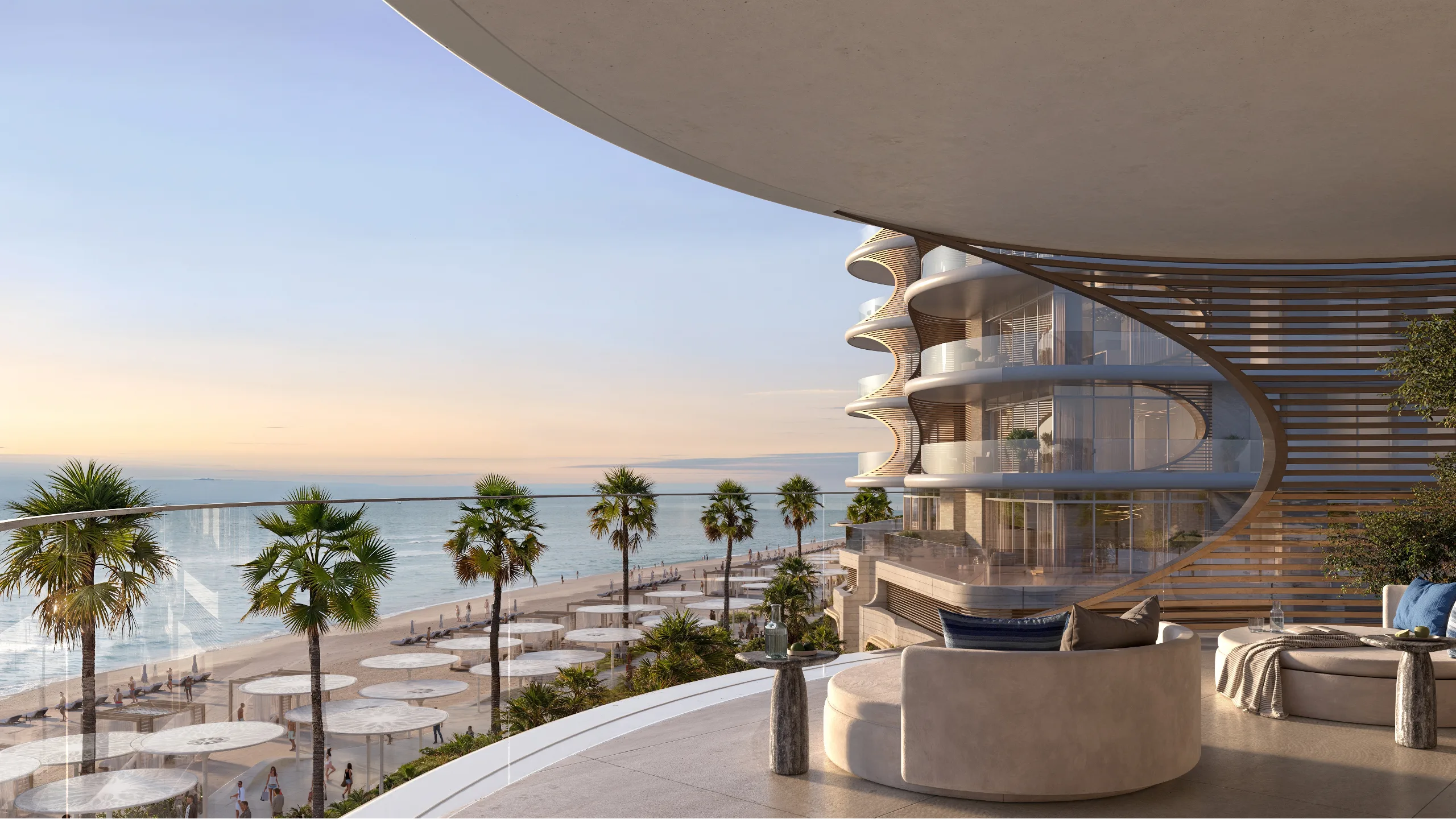
Current waterfront projects include Nobu Residences 619 Brickell, Mandarin Oriental Residences at Brickell Key and Four Seasons Private Residences Coconut Grove.
Liam Bailey is Global Head of Knight Frank’s Research Department, leading the firm’s global research strategy and overseeing projects across the UK and international markets.
Our global Branded Residential Developments team offers seamless sales, marketing, distribution, and consultancy solutions. Fill in your details and we'll be in touch to discuss your needs.
Delve deeper into the insights, access our comprehensive dataset, and explore future predictions from our team of experts.
Sorry!
An unexpected error has occurred.
Please try again later.